Published on
Story contact: Nicholas Childress, CVMMarCom@missouri.edu
Photos by Karen Clifford
As veterinarians tackle particularly difficult cases, they often turn to the Veterinary Medical Diagnostic Laboratory (VMDL) at the University of Missouri College of Veterinary Medicine. There, answers emerge and collaboration turns them into effective treatment solutions.
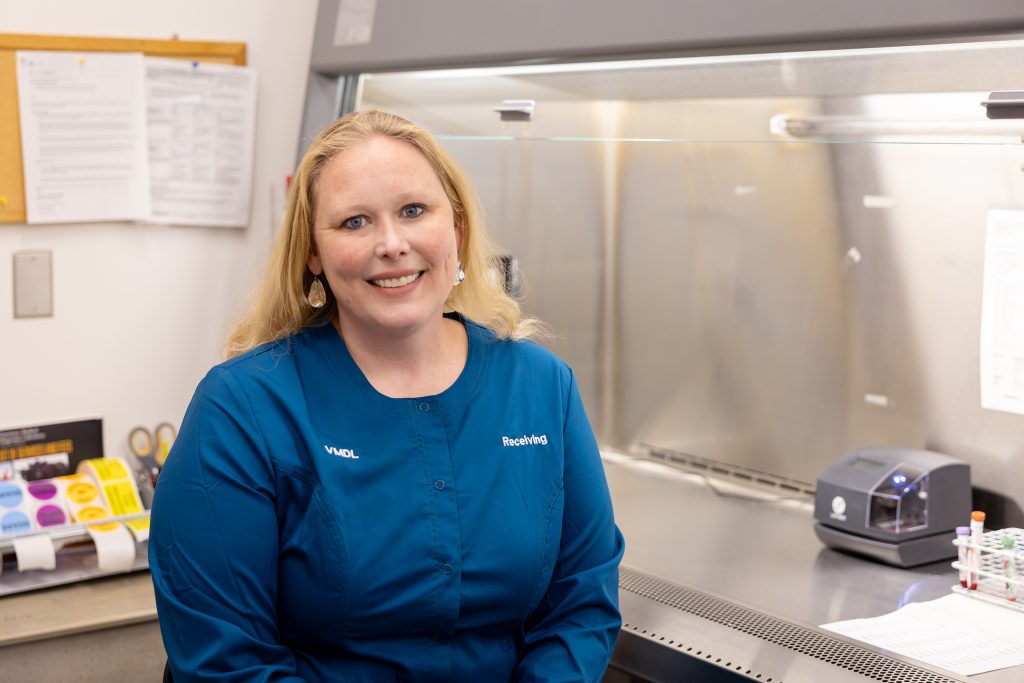
The VMDL is Missouri’s only laboratory accredited by the American Association of Veterinary Laboratory Diagnosticians, meaning the answers coming out of the lab are held to the highest standards and help guide decisions when it matters most. At the center is Lauren Delaney, DVM, a client service veterinarian who connects practitioners, producers and animal owners to the lab’s expertise.
A Mizzou College of Veterinary Medicine graduate, Delaney joined the VMDL in 2018. Her interests have always spanned a wide range of disciplines, from wildlife medicine to ophthalmology and radiology. That curiosity and a love of problem-solving led her to diagnostic medicine, where every day brings a new challenge.
“I really enjoy the puzzles we get exposed to,” Delaney said. “If a private practice can’t figure something out, a call to us is often the next step. We see a little bit of everything, and there’s always something new to investigate. That variety is what makes every day interesting and meaningful.”
A bridge to expertise
Within the VMDL, Delaney serves as a key point of contact for veterinarians and clients. She identifies appropriate diagnostic tests and guides case submissions so specialists can deliver accurate, timely answers.
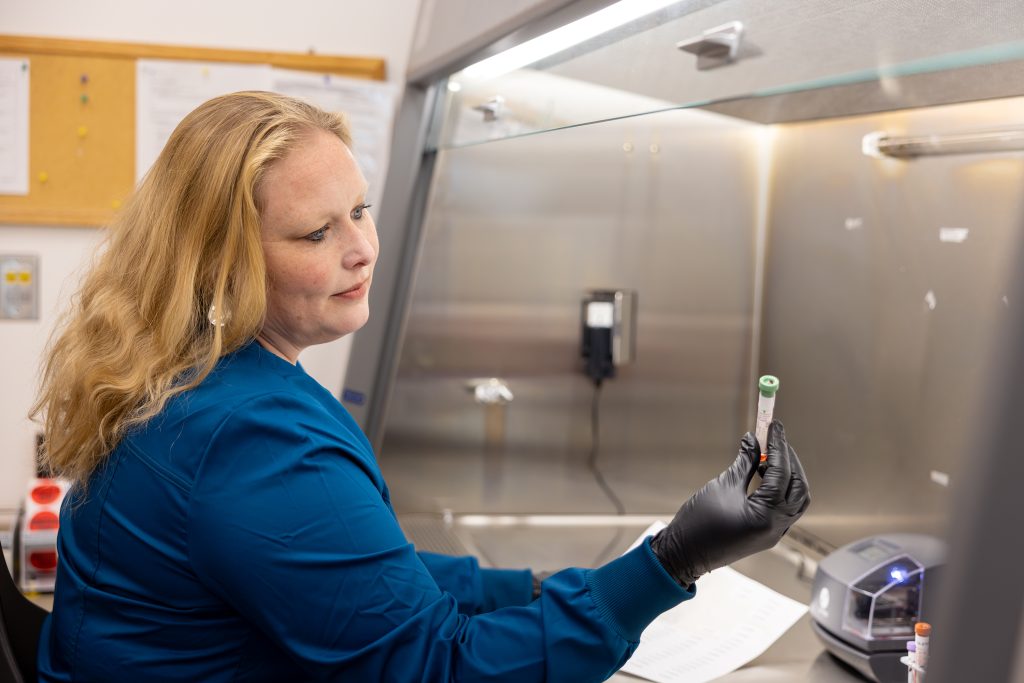
She also oversees the receiving section, where dozens of shipments of vital samples arrive daily. Each submission is carefully sorted and routed, often across multiple lab sections, to ensure reliable results.
“A submission might include samples going to several parts of the lab,” Delaney said. “Our team determines where each sample goes and whether any need to be shared. Those decisions ensure every test is performed correctly and produces reliable results.”
Her role requires both scientific expertise and leadership. Coordinating the intake and distribution of hundreds of samples while responding to the veterinarians’ needs demands precision. Delaney describes her work as a bridge between those in the field and the depth of expertise within the lab, a connection that helps veterinarians make informed decisions with confidence.
Impact across Missouri
Much of the lab’s work happens behind the scenes, but its impact is felt across Missouri’s farms, wildlife populations and communities.
One example is chronic wasting disease testing. Each year, the VMDL partners with the Missouri Department of Conservation to process nearly 40,000 deer cases — protecting ecosystems, hunting traditions and the food supply. The lab also identifies livestock health issues, investigates feed contamination and guides producers toward effective treatments, supporting agricultural operations and animal populations.
“We touch people’s lives in ways they might not even realize,” Delaney said. “Even when I don’t see the animals myself, I know our work protects them and supports Missouri’s producers. That impact is why I love this job.”
Helping animals behind the scenes
Delaney often sees her guidance translate directly to better outcomes.
“When a beef producer faces a respiratory problem in a herd, they might bring in an animal for necropsy,” she said. “We identify the pathogen and help guide treatment decisions for the rest of the cattle. The science minimizes suffering and reduces financial loss for the producer.”
Even in cases without a positive outcome, the data gathered can prevent illness or loss in many more animals. That ripple effect helps veterinarians and producers make better decisions at scale.
Looking toward the future
Delaney is passionate about introducing veterinary students and trainees to careers in diagnostic medicine, a field often overlooked but rich with opportunities in research, problem-solving and public service.
“Watching students discover those opportunities and see how their work can make a real difference is one of the most rewarding parts of my job,” she said.
Through mentorship and hands-on guidance, Delaney is helping shape the next generation of veterinarians who will carry this work forward, extending the impact of diagnostic medicine far beyond the lab.
As the VMDL continues to grow, including a move into a new and expanded facility, she’s focused on increasing the lab’s reach and the number of veterinarians, producers and communities it can support.
“The new space will allow us to expand our services and serve people across the state more effectively,” she said. “It also creates more opportunities to train students and connect them to this work. At the end of the day, it’s about providing answers when they matter most — protecting animal health, supporting agriculture and making a real difference across Missouri and beyond.”