Published on
Updated on
Story contact: Nicholas Childress, CVMMarCom@missouri.edu
Photos by Karen Clifford
Patients at the University of Missouri’s Veterinary Health Center (VHC) don’t always show obvious signs of what’s wrong. In many cases, the answers lie beneath the surface. Inside the hospital’s radiology service, imaging technologies reveal what can’t be detected through exams alone.
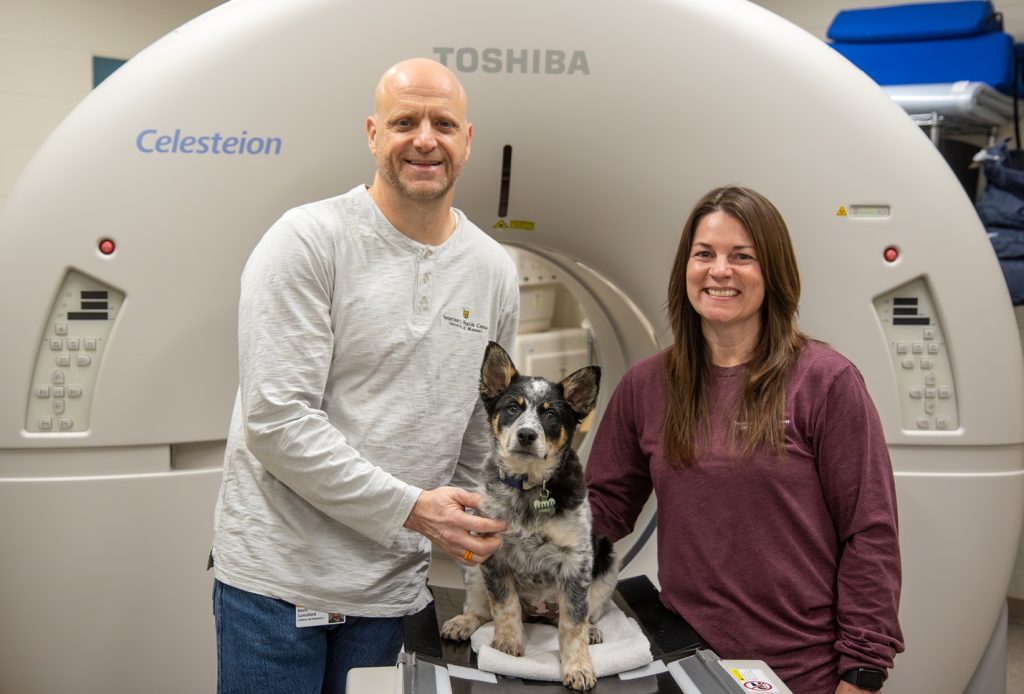
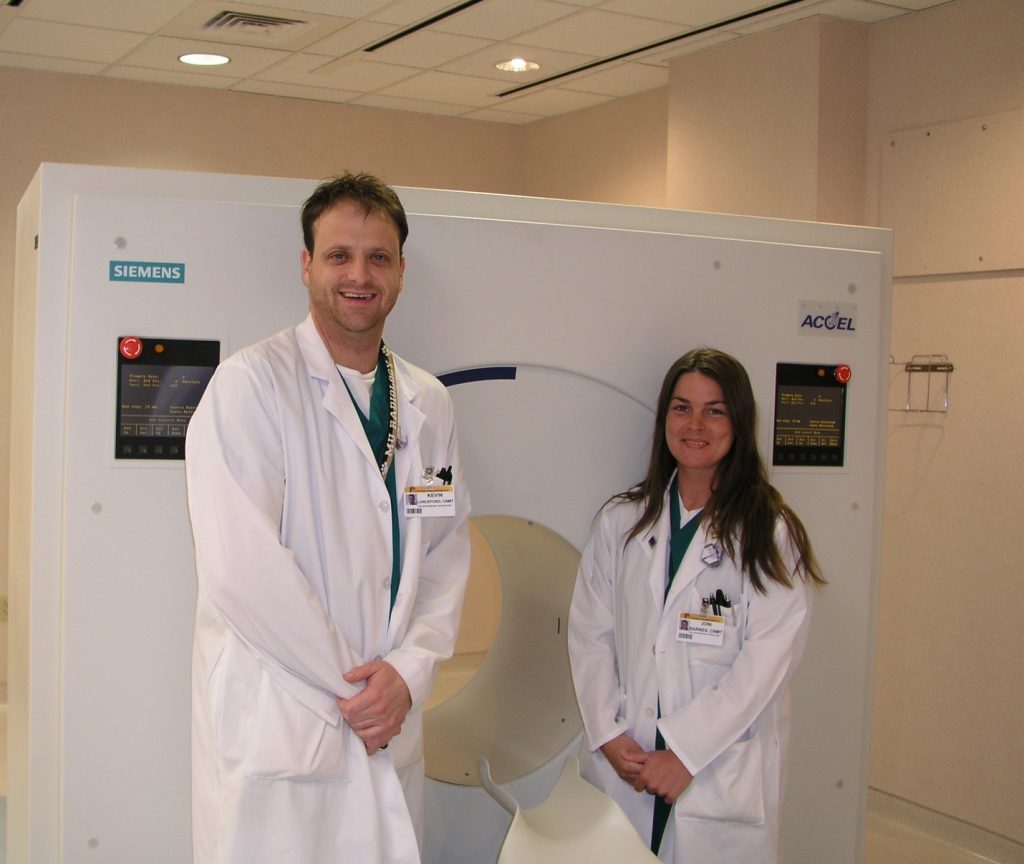
For Kevin and Joni Lunceford, that mission is both professional and personal. The Mizzou graduates met while working in human health at MU Health Care and eventually brought their skills and shared love of animals to the VHC’s radiology service.
Kevin Lunceford, the health center’s radiology manager, spent more than 20 years in nuclear medicine before transitioning to veterinary care. Joni Lunceford started at a few hours a week, performing scans on a mobile unit, before accepting a full-time role as a nuclear medicine technologist.
The experiences that led the Luncefords to the VHC uniquely position them to lead in veterinary imaging. For them, every scan represents an opportunity to uncover answers.
“Each day we get to work with animals and help diagnose their problems,” Joni Lunceford said. “Being able to see what’s going on inside them, and then help the clinicians determine the best care, is incredibly fulfilling. Whether it’s a dog with a spinal injury or a cat with an unknown illness, our work in imaging can literally change an animal’s life.”
Powering every specialty
At the VHC, radiology serves as a diagnostic hub, supporting nearly every clinical service across the hospital. From neurology and oncology to orthopedics and equine medicine, clinicians rely on imaging to better understand complex medical conditions.
Supporting a wide range of services requires an array of imaging tools, each offering a detailed view inside the patient. At Mizzou, that means investing in advanced tools rarely found elsewhere in Missouri and the region, backed by a team with the expertise to use them to their fullest potential.
“We support the hospital through a truly impressive imaging suite, with advanced modalities like PET-CTs, CTs, MRIs, radiographs, ultrasounds and fluoroscopies,” Kevin Lunceford said. “Paired with a highly skilled team, these tools allow us to deliver exceptional image quality and support the wide range of services across the hospital.”
These tools strengthen the ability of clinicians to diagnose a variety of conditions, from foreign objects and fractures to neurological disorders and cancers.
“Sometimes we find things we didn’t even know were there to look for,” Joni Lunceford said. “That insight, combined with our expertise and technology, helps clinicians make the best decisions for their patients and can completely change an animal’s care.”
Cross-campus collaboration
In addition to caring for patients, the VHC’s radiology team also works closely with researchers across campus to translate discoveries from animal medicine to human health.
Some of that collaboration involves imaging isotopes produced right down the road at the MU Research Reactor.
This investment in imaging helped Mizzou lead clinical trials using nuclear medicine, including PET imaging that improves how therapies are tracked and evaluated. With these tools and expertise, the radiology team provides insights that enhance patient care and drive innovation in veterinary and human medicine.
“Some of the treatments now being used in human clinical trials actually started with clinical trials here at the Veterinary Health Center,” Joni Lunceford said. “Researchers were able to study them in animal clinical trials, and that work helped move the therapy forward into the hospital for human use.”
Close proximity to advanced research facilities allows teams to move quickly when new ideas and treatments emerge. Having access to radioisotopes from MURR is a big advantage, since their short shelf life makes immediate use essential.
“If a clinician approaches us with a new study, we can often have an isotope here within an hour that’s calibrated for that patient,” Kevin Lunceford said. “Not many places have that kind of access or the ability to move that quickly.”
A team-driven mission
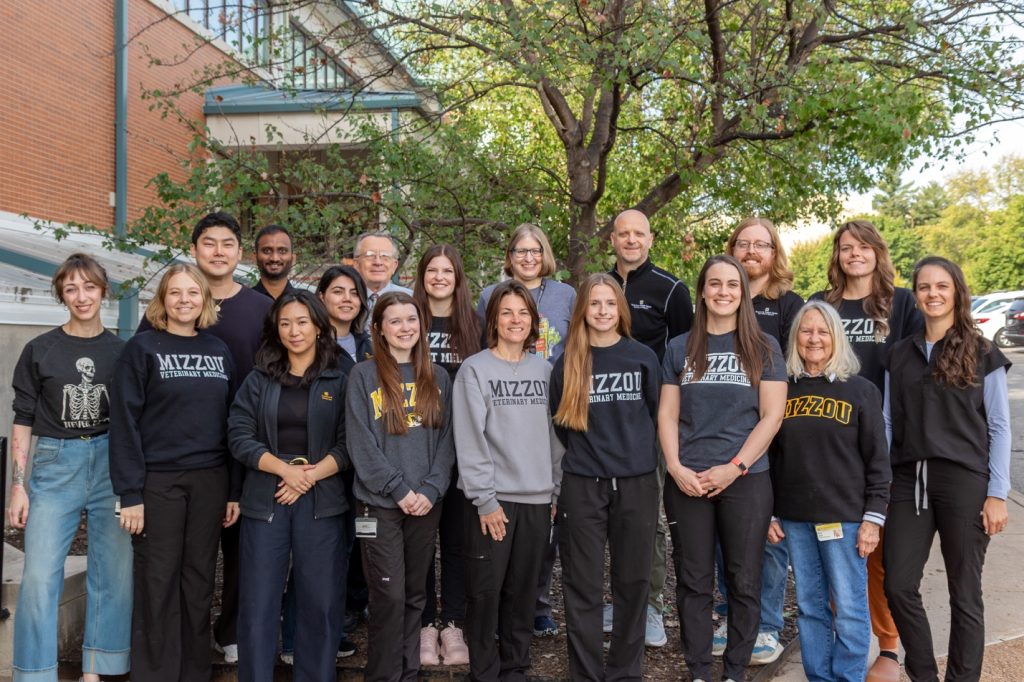
While the advanced technology and rapid access to resources like MURR support groundbreaking research, the Luncefords emphasize that it’s the people at the VHC who make the radiology team exceptional.
“We love Mizzou,” Kevin Lunceford said. “There’s real camaraderie, and we all pull in the same direction. It’s exciting to be part of a team that makes a real difference for our patients.”
Together the radiology team helps ensure that patients can move quickly from diagnosis to treatment as efficiently as possible.
“The radiology team plays an important role in supporting the hospital,” Kevin Lunceford said. “It’s not uncommon for a patient to have a diagnostic exam, an MRI or CT, and then be in surgery the same day. I’m always amazed at the level of care we provide.”
At the Veterinary Health Center, those capabilities, combined with a collaborative, campus-wide approach, allow radiology to play a vital role in advancing veterinary medicine and improving the lives of animals and the people who love them.