Published on
Story contact: Nicholas Childress, CVMMarCom@missouri.edu
Photos by Karen Clifford
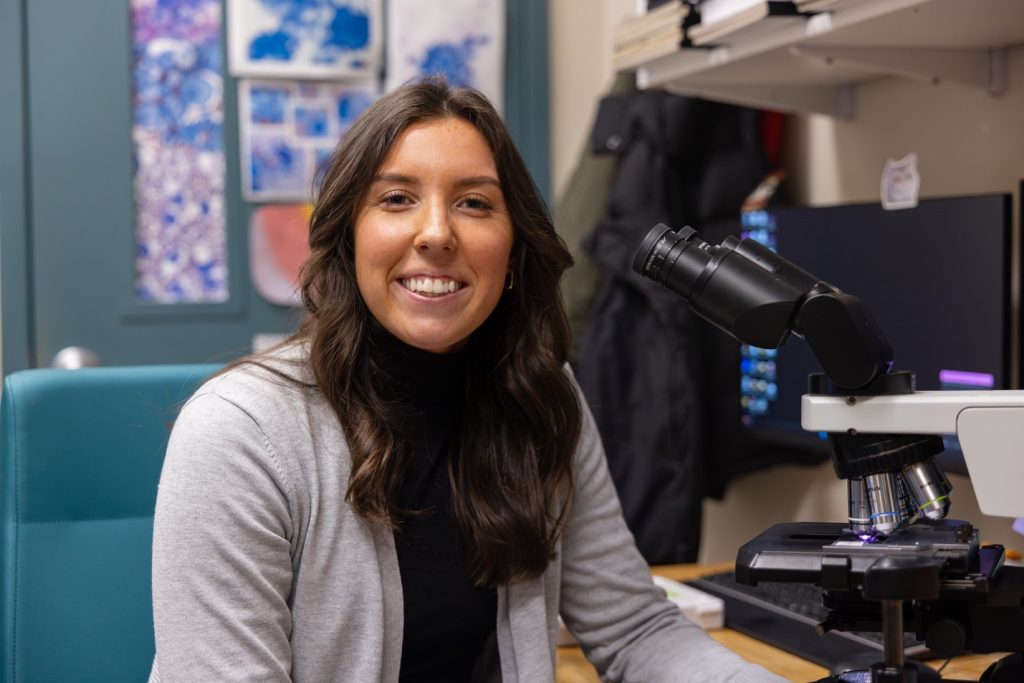
The first time Jacqueline “Jacqui” Nunnelley, DVM, peered into a microscope, she didn’t just see cells, she saw possibility. Each slide revealed a mystery waiting to be solved, a puzzle that combined science, empathy and intuition. What began as curiosity became a calling, one that carried her from the islands of Grenada to the diagnostic labs of the University of Missouri.
“I’ve always loved microscopy and understanding how cells tell a story,” Nunnelley said. “Clinical pathology is the perfect blend of science and problem-solving. Every slide offers clues that help us piece together what’s happening with a patient.”
When Nunnelley decided to pursue a residency to deepen her knowledge of veterinary pathology, she sought a program that emphasized both mentorship and professional growth. She interviewed with Mizzou’s Veterinary Medical Diagnostic Laboratory (VMDL) and quickly sensed it was the right fit.
“I could tell right away that the pathologists were genuine people,” she said. “They eased my nerves and made me feel like I really belonged here.”
Despite never having visited Missouri in her life, Nunnelley said she soon found her first impression to be true. Now in her third and final year of the clinical pathology residency, she says Mizzou’s supportive atmosphere has been key to her development. “Everyone supports each other, and that collaborative environment has made it an incredible place to learn, grow and become a better pathologist,” she said.
Learning through teaching and research
In addition to interpreting diagnostic samples, residents at the VMDL play a role in teaching veterinary students. Nunnelley said helping others find confidence at the microscope has reinforced her own knowledge.
“Microscopy can be intimidating at first,” she said. “Guiding students through those early moments and helping them feel comfortable asking questions has been so rewarding. It reminds me that we’re all constantly learning.”
Her mentor, Angela Royal, DVM, PhD, an associate clinical professor and the clinical pathology section head, has seen that enthusiasm in action.
“Jacqui has become an integral part of our laboratory team,” Royal said. “She has successfully taken on the role of senior resident and is always willing to lend a hand. She is poised to become a skilled diagnostic clinical pathologist.”
Alongside her clinical duties, Nunnelley is completing a master’s degree, with research centered on Theileria orientalis, a tick-borne parasite that primarily affects cattle and poses a threat to animal welfare and food safety. The project has added her to the group VMDL experts in studying bovine blood smears, a distinction Royal says reflects Nunnelly’s initiative and curiosity.
“Jacqui’s evaluated more bovine blood smears than most board-certified clinical pathologists,” Royal said. “Her dedication to research and her willingness to take on additional projects has been remarkable. Many of her presentations and publications have been self-driven efforts to contribute to the scientific community.”
Collaboration across disciplines
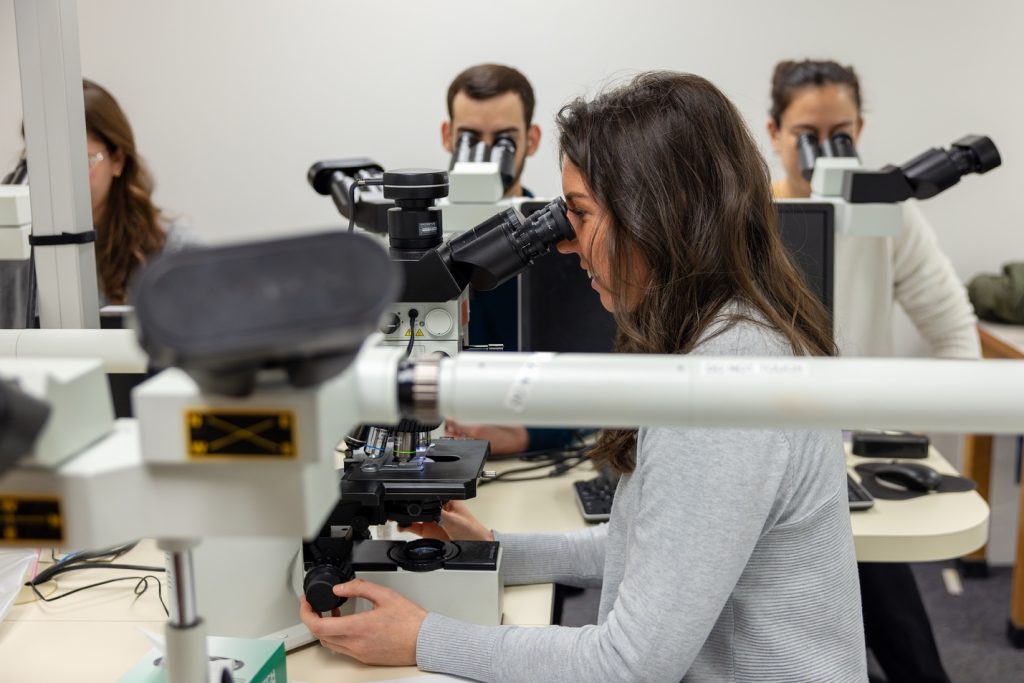
One of Nunnelley’s favorite aspects of the VMDL program is its emphasis on collaboration between clinical and anatomic pathology residents. For instance, during joint rounds, teams review cytology cases, histologic correlates and complex scenarios.
“Those joint rounds are incredibly valuable,” Nunnelley said. “That back-and-forth helps us all become better diagnosticians.”
The collaborative culture extends beyond the lab, fostering a sense of community that Nunnelley says is unlike any she’s experienced before.
“At other institutions, everything moves fast and feels more individual,” she said. “Here, there’s such a strong sense of connection between the residents, the faculty and even the community around Columbia. It’s something special.”
Ready for the future
As Nunnelley prepares to complete her residency, she is ready to take the skills she honed at Mizzou into a national diagnostic role, reviewing cases from across the country and advancing the field she loves.
Her time at the VMDL has given her more than hands-on experience. It’s built her confidence, sharpened her instincts and connected her to a network of mentors and colleagues who share her drive to serve animals and the people who care for them.
“Because of the variety of cases we see here, we graduate ready for anything,” she said. “Mizzou truly prepares us to make an impact.”
With that spirit, Nunnelley will carry the skills she honed at Mizzou — collaboration, curiosity and care — into every slide she reads and every diagnosis she makes.