Published on
Story contact: Nicholas Childress, CVMMarCom@missouri.edu
Photo courtesy Nikki Ellison
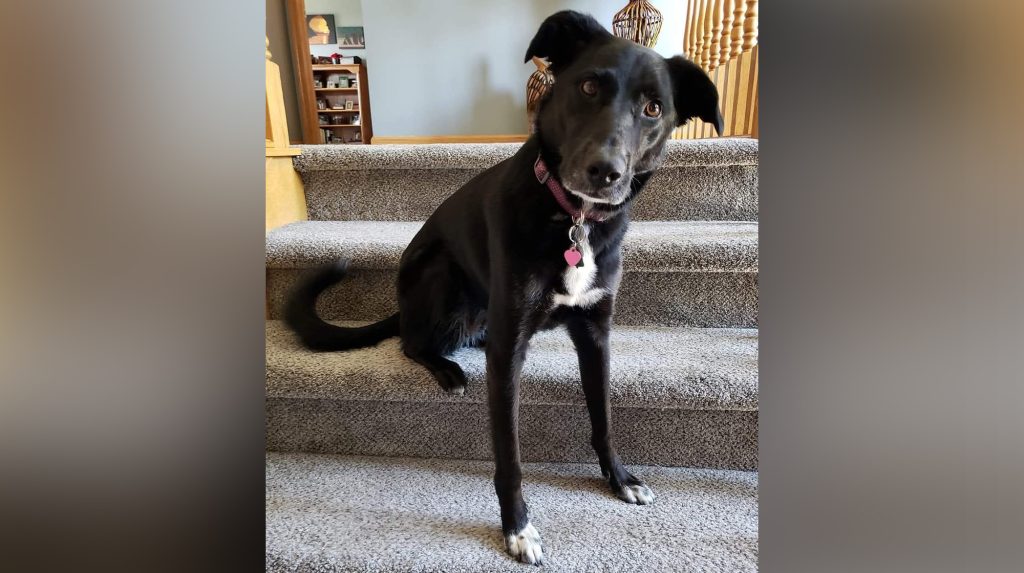
Caroline wasn’t acting sick. At 11 years old, the Kansas City area dog was still gentle, affectionate and eager for her daily routines. But her owner, Nikki Ellison, noticed some weight loss and small changes that did not sit right.
“She was quieter than usual and just not quite herself,” Ellison said. “Nothing dramatic. Just enough that we knew something was off.”
During a routine visit with their local veterinarian, the reason became clear. Imaging revealed a mass in Caroline’s chest. Further evaluation identified the tumor as a thymoma, a rare growth that develops in the thymus, an organ involved in immune function.
For Ellison and her husband, the diagnosis was overwhelming.
“It crushed us,” Ellison said. “Caroline has always been such a constant in our lives. Suddenly we were facing something we could not ignore or wait out.”
Their veterinarian referred them to the University of Missouri College of Veterinary Medicine’s Veterinary Health Center, where Caroline’s case was evaluated by a multidisciplinary surgical team.
A careful approach to a complex diagnosis
Thymomas are often discovered after they have grown large and begun to cause visible symptoms. In Caroline’s case, the tumor was identified early.
“That timing made a significant difference,” said Owen Skinner, BVSc, DECVS, DACVS-SA, MRCVS, associate professor of small animal surgical oncology. “Because Caroline’s mass was still relatively small, we were able to consider a minimally invasive surgical option rather than opening the chest.”
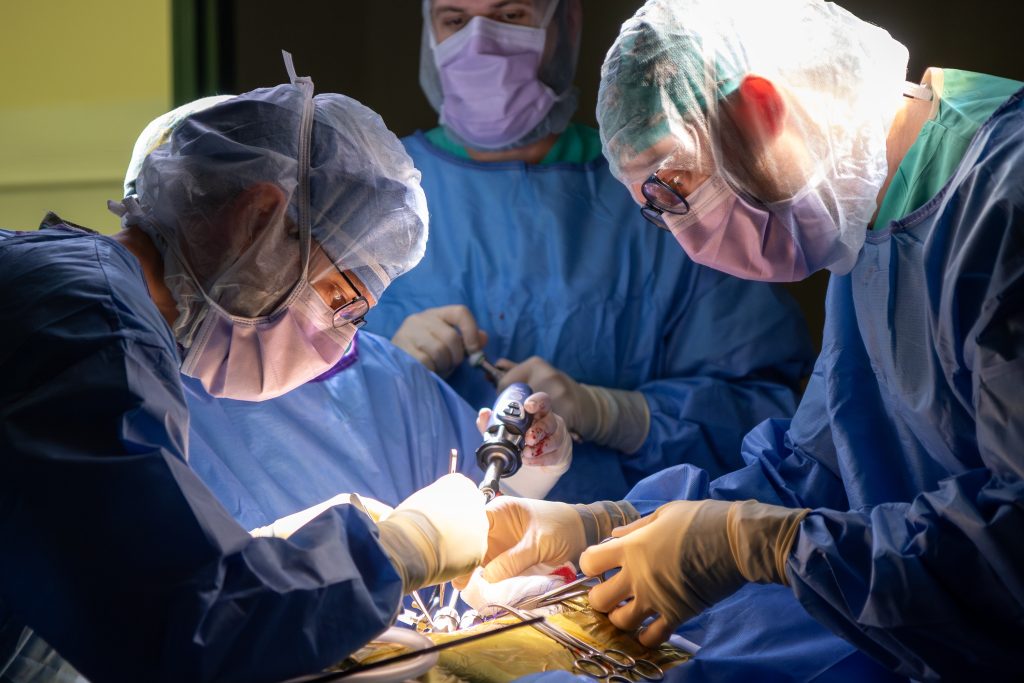
Skinner worked closely with Josephine Dornbusch, DVM, MS, DACVS-SA, an assistant teaching professor of small animal surgery, to plan a thoracoscopic procedure. Often referred to as keyhole surgery, the technique uses small incisions between the ribs to access the chest cavity with specialized instruments and a camera.
“This approach allows us to remove the tumor while minimizing trauma to surrounding structures,” Skinner said. “That typically translates to less pain and a much faster recovery for the patient.”
For the Ellisons, the clarity of the plan and the transparency of the care team helped ease an already emotional situation.
“They walked us through everything,” Ellison said. “The risks, the benefits, what recovery would look like. We never felt rushed or talked down to.”
Surgery and recovery
The procedure was completed successfully, with surgeons able to remove the tumor while preserving critical nerves and blood vessels. Caroline recovered smoothly from anesthesia and was able to return home shortly after surgery.
“Patients tend to bounce back quickly after thoracoscopic procedures,” Skinner said. “Dogs are often comfortable and active within hours. For Caroline, this meant a safe, comfortable surgery with minimal disruption to her life.”
At home, Caroline’s biggest challenge was adjusting to temporary activity restrictions.
“Being told she could not jump on the bed was probably the hardest part,” Ellison said with a laugh.
The Veterinary Health Center team remained in close communication with the family throughout Caroline’s recovery, providing guidance, follow-up and reassurance. Access to detailed medical notes and imaging through the client portal helped the Ellisons stay informed during a stressful time.
“It made a huge difference,” Ellison said. “We could review everything, even when we were still processing emotionally.”
At her two-week recheck appointment, Caroline showed no signs of discomfort and had returned to her normal energy level.
“Her prognosis is excellent,” Skinner said. “The surgery was very likely curative, and the risk of recurrence is low. We will continue to monitor her, but she is doing extremely well.”
More than a successful outcome
For the Ellisons, the experience reinforced the importance of trusting their instincts and choosing a care team prepared to act on them.
“Even if the outcome had been different, we would have known we did everything we could,” Ellison said. “We felt supported the entire way. Caroline was treated like she mattered, because she does.”
Caroline’s case reflects a broader philosophy at the Veterinary Health Center, where treatment decisions are guided by the individual patient and the life they return to after care.
“We tailor every plan to what is best for that animal and their family,” Skinner said. “Our goal is not just to treat disease, but to preserve quality of life whenever possible.”
For Caroline, that meant a minimally invasive approach, a smooth recovery and many more days doing what she does best, staying close to the people who noticed when something wasn’t quite right.