Welcome to ReCHAI
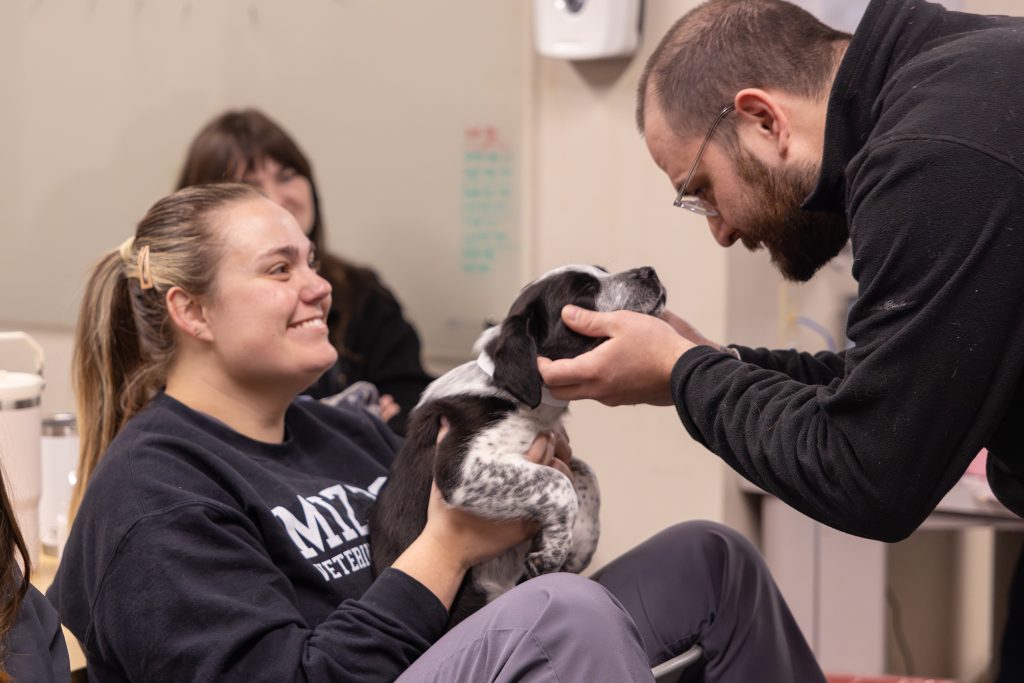
People and animals have lived close to one another for centuries. The human-animal bond is the strong connection that they feel toward one another. The MU College of Veterinary Medicine is proud of this exciting center based on the growing field of research showing how the human-animal bond impacts health in people and animals.
Research Update
ReCHAI is currently involved in cutting edge research aiming to promote evidence-based approaches that enhance animal welfare while strengthening the human–animal bond. Don Cherry’s research focuses on understanding how animals perceive the environments and roles humans assign to them. In collaboration with Dr. Britt Florkiewicz and the Animal Behavior and Cognition Lab, his current projects integrate behavioral, physiological, biological, and socio-emotional indicators to better understand animals’ experiences of these environments and roles. His research employs tools such as facial action coding systems, ethograms, wearable biometric sensors, and biological sampling to analyze communication, stress regulation, and engagement during real-world human-animal interactions.

Who we are:
The Research Center for Human-Animal Interaction (ReCHAI), founded in 2005, in College of Veterinary Medicine has a mission of education and conducting programs and studies about the benefits of human-animal interaction. ReCHAI is on the leading edge of programs and studies that explore how the human-animal bond has an impact on the health of people and animals.

ReCHAI is designed to:
- Develop a program for research and education to study the health benefits of human-animal interaction (HAI).
- Promote the science of HAI.
- Document evidence demonstrating Animal Assisted Interventions (AAI) as a beneficial form of complementary therapy.
- Foster educational and research opportunities for MU students, as well as students from around the country and globe.
- Collaborate with other centers nationally and internationally to promote HAI.
- Foster public understanding of benefits of HAI.

Member of
