Published on
Updated on
Story contact: Rachel Becker, CVMMarCom@missouri.edu
Photos by Karen Clifford
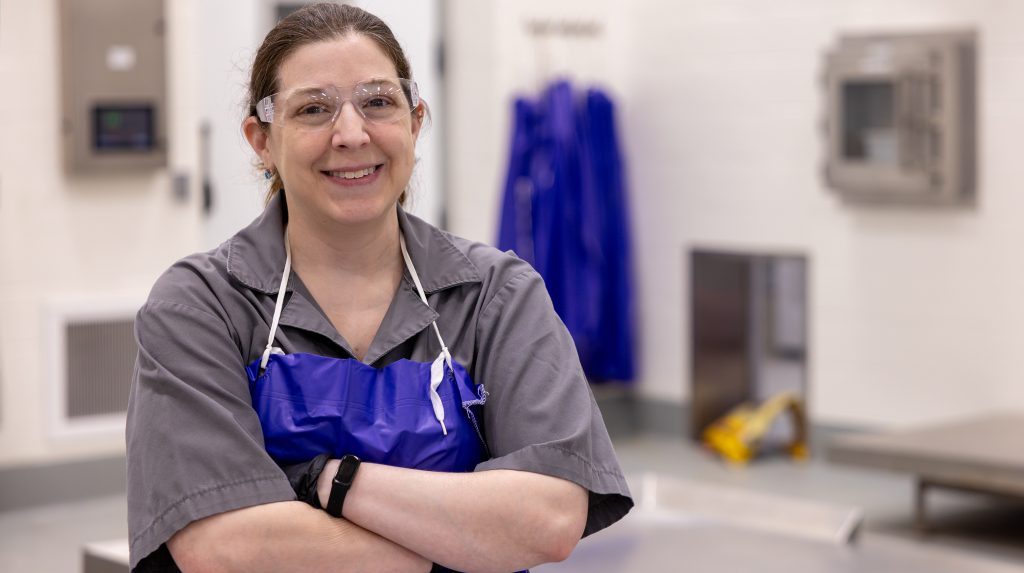
When the bay doors open at the University of Missouri’s recently renovated Veterinary Medical Diagnostic Laboratory, faculty diagnosticians and students step into a purpose-built, state-of-the-art space designed for precision, learning and discovery. Stainless-steel workstations, advanced diagnostic tools and a bright, modern layout set the stage for the work happening inside. The investigations underway each day are led by experienced faculty and shared with the next generation of veterinarians, shaping decisions that matter for animal health across Missouri and beyond.
It’s here that Assistant Clinical Professor Annabelle Burnum, DVM, DACVP, does what she values most: teaching students how to see, not just look. Long after they leave this facility for their own practices, students will rely on more than memorized answers. They’ll need the confidence to interpret findings, communicate results and follow subtle clues to a diagnosis. Pathology demands careful observation, critical thinking and the discipline to dig deeper. This lab was built to support exactly that.
Connecting clues, cultivating curiosity
Anatomic pathology, along with much of the work done at the Veterinary Medical Diagnostic Laboratory, often operates like a behind-the-scenes detective service. Every case arrives as a puzzle, and pathologists work through patient histories, physical exams and laboratory findings to uncover the truth behind disease and deliver clear, actionable diagnoses.
Burnum sees pathology as the study of disease powered by curiosity, critical thinking and diagnostic reasoning. Whether she is performing a post-mortem examination, reviewing biopsies or leading case discussions alongside colleagues, each day offers an opportunity to investigate and to teach.
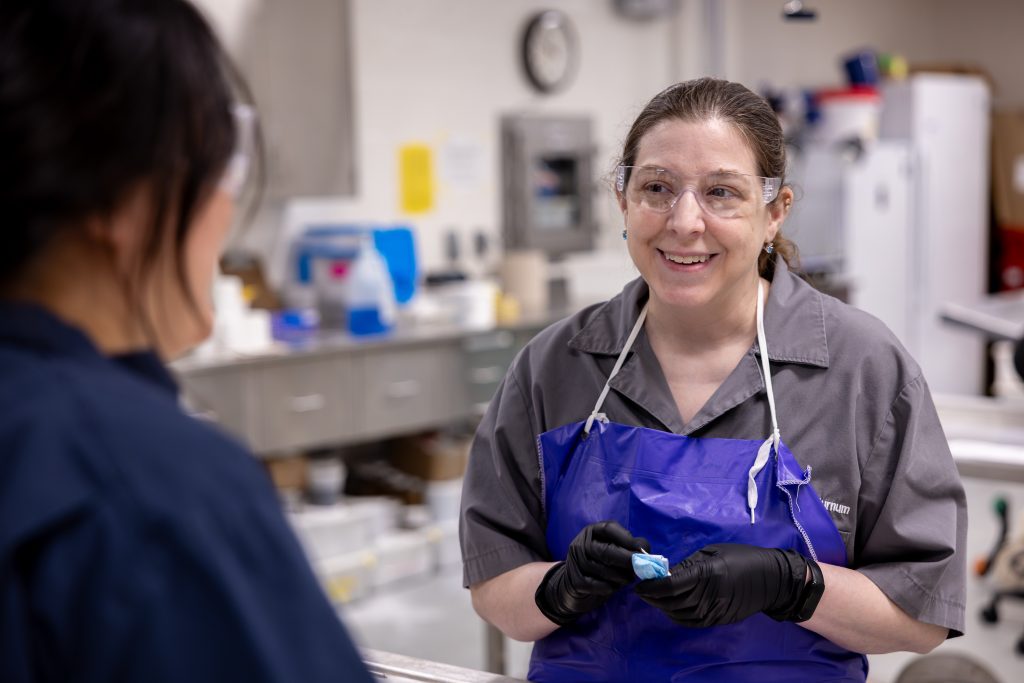
Some days bring textbook examples of disease processes, moments Burnum values because they allow students connect classroom learning to real clinical cases. She encourages them to ask questions, examine what they see and embrace the challenge of solving clinical mysteries.
“Those moments are powerful because students can connect theory to real life,” she said. “I encourage them to ask questions, explore and stay curious. That’s where you see confidence and excitement start to build.”
Inspiring tomorrow’s veterinarians
That commitment to developing future veterinarians runs through every part of her work. Burnum coordinates Systemic Pathology I and II and teaches across the second through fourth years of the curriculum. She advises student organizations, provides academic support and helps guide residents through the anatomic pathology program. Her service on the admissions committee allows her to support aspiring veterinarians from the very start of their journey.
“Dr. Burnum has been an essential part in fostering my enthusiasm toward the field of diagnostic pathology, and with her encouragement, I’ve had the confidence to experience the parts of veterinary medicine I enjoy most,” said Yoomin Jo, a fourth-year veterinary student. “Her class is what made me decide on pursuing a residency in anatomic pathology. Without her, I really don’t think I’d be where I am today.”
For Burnum, those connections with students and trainees are at the heart of what makes her work meaningful.
“It’s extremely fulfilling because I get to help shape the future of veterinary medicine and the future of our school,” Burnum said. “This place really feels like home. It did from the first day I walked in for my interview. This is my dream job.”
That sense of purpose is renewed daily through the enthusiasm of the learners she mentors.
“That’s where I get a lot of my energy, from my interaction with my students and my trainees,” Burnum said. “Watching them grow into confident clinicians is what makes this work meaningful.”