Published on
Story contact: Nicholas Childress, CVMMarCom@missouri.edu
Photos by Karen Clifford
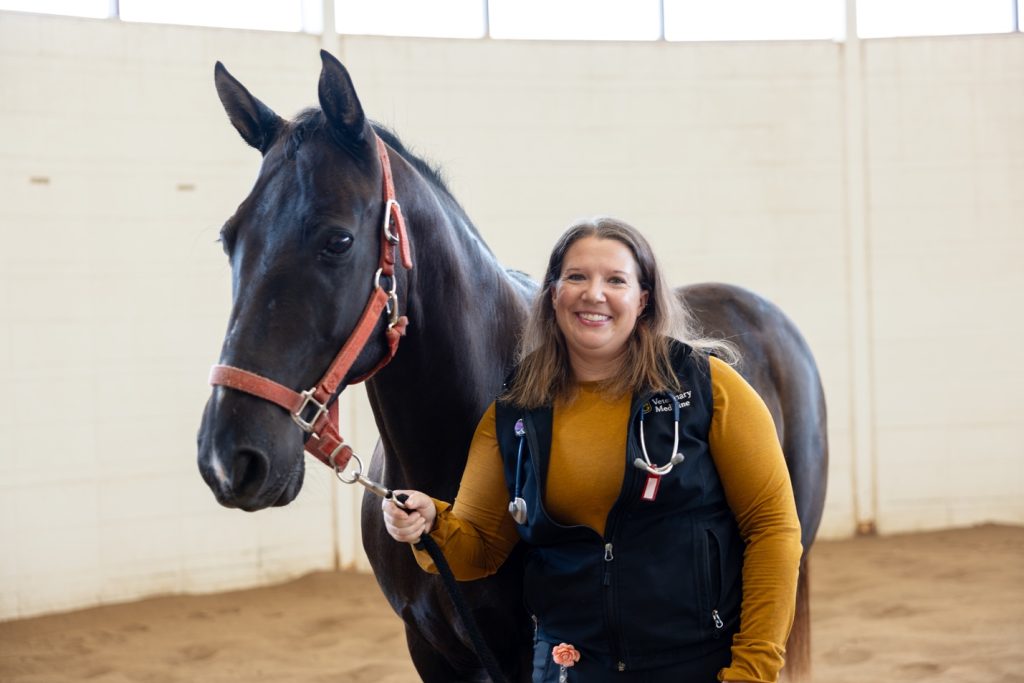
A horse’s condition can change in minutes, demanding careful judgment and specialized medical expertise. At the University of Missouri College of Veterinary Medicine, Hannah Leventhal, DVM, MS, DACVIM (LAIM), provides that care while teaching students how to do the same.
Leventhal’s connection to horses began when she was five years old and her mother introduced her to horseback riding. Before college, Leventhal initially thought she would pursue small-animal medicine. That path changed during her undergraduate education, where hands-on experience with research horses ignited a devotion to equine medicine.
“As an undergrad, I spent so much time in the horse barn that the graduate students joked I practically lived there,” Leventhal said. “I fell in love with the research and everything we were doing with horses. By the time I started vet school, I knew caring for horses was my true passion.”
Originally from Colorado, Leventhal’s veterinary career has taken her across the country, from North Carolina and Kentucky to Virginia and Nevada, before bringing her to Mizzou in 2024. Along the way, she gained experience caring for horses in a variety of settings, building the expertise that now shapes her work in equine emergency and internal medicine.
“I love emergency care, teaching and the academic environment,” Leventhal said. “Coming to Mizzou gave me the opportunity to bring together my work in emergency care with teaching and collaborating in an academic setting.”
Responding in the moment
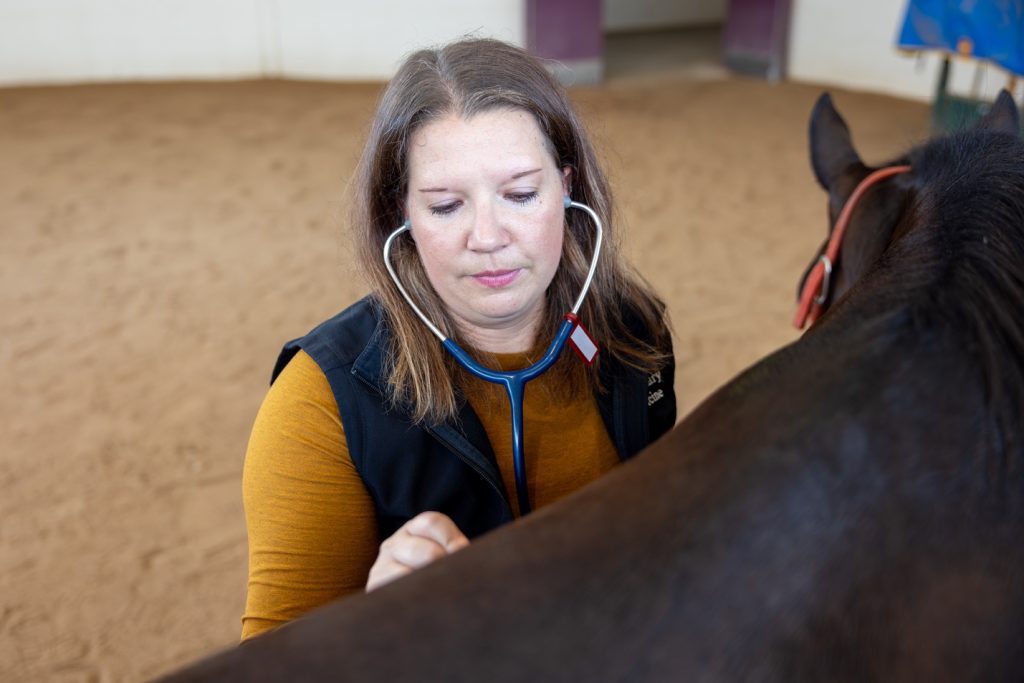
Leventhal thrives in equine emergency medicine, where quick thinking can mean the difference between life and death. Her experience in Nevada, including responding to emergencies involving wild mustangs, taught her to adapt quickly and creatively, even when resources are limited.
“I enjoy the puzzles of veterinary medicine,” Leventhal said. “Even in high-pressure situations, I focus on staying calm, prioritizing care and guiding our students through each step so they can respond with confidence.”
She said collaboration is equally important. As one of only a few tertiary equine referral services in Missouri, Mizzou supports horse owners statewide and serves as a critical partner to veterinarians across the region, offering guidance on diagnostics and treatment plans.
“I really value transparency with clients,” she said. “We talk openly about what a horse needs and the possible outcomes. Our goal is always to meet them in the middle, providing the best care for their horse while respecting their resources.”
Teaching the next generation
Leventhal holds that same level of enthusiasm for teaching, because each case offers a chance to show students how theory translates into real-world care.
“I love watching students start a case unsure of themselves and finish it with confidence,” she said. “Emergencies are high-pressure, but they’re also incredible teaching moments. Being able to guide students while keeping a horse stable is extremely rewarding.”
Her mentorship extends beyond the clinic. Leventhal works closely with interns and residents, helping them refine diagnostic skills, manage emergencies and think independently while still providing support.
“It’s about giving them space to make decisions, see the outcomes and learn from every step,” she said. “We debrief after cases, talk through what went well and what could be done differently, and make sure learning continues after the horse is out of immediate danger.”
Through her guidance, students develop technical skills as well as the confidence and judgment that define skilled equine veterinarians. For Leventhal, there’s nothing more fulfilling than watching them grow into clinicians who are ready to meet the demands of emergency medicine with skill, composure and compassion.
An eye toward progress
Leventhal emphasizes that Mizzou’s collaborative environment makes shaping the future of veterinary medicine possible.
“Being part of this collegial, team-oriented environment allows us to do the best work for our patients and students,” she said. “It’s exciting to help shape both the future of veterinary education and equine care here at Mizzou.”
Looking ahead, she is focused on expanding Mizzou’s equine emergency services while enhancing student learning through electives and practical experiences before clinical rotations.
“As we continue to grow, I’m also thinking about how we can enhance student learning,” Leventhal said. “Providing additional electives and practical experiences helps students gain confidence and competence in real time.”
Leventhal’s work embodies Mizzou’s commitment to advancing veterinary medicine through exceptional patient care, hands-on education and collaboration. As she continues to help expand equine emergency services and prepare future veterinarians, she is pushing the profession forward as a whole.