Published on
Updated on
Story contact: Nicholas Childress, CVMMarCom@missouri.edu
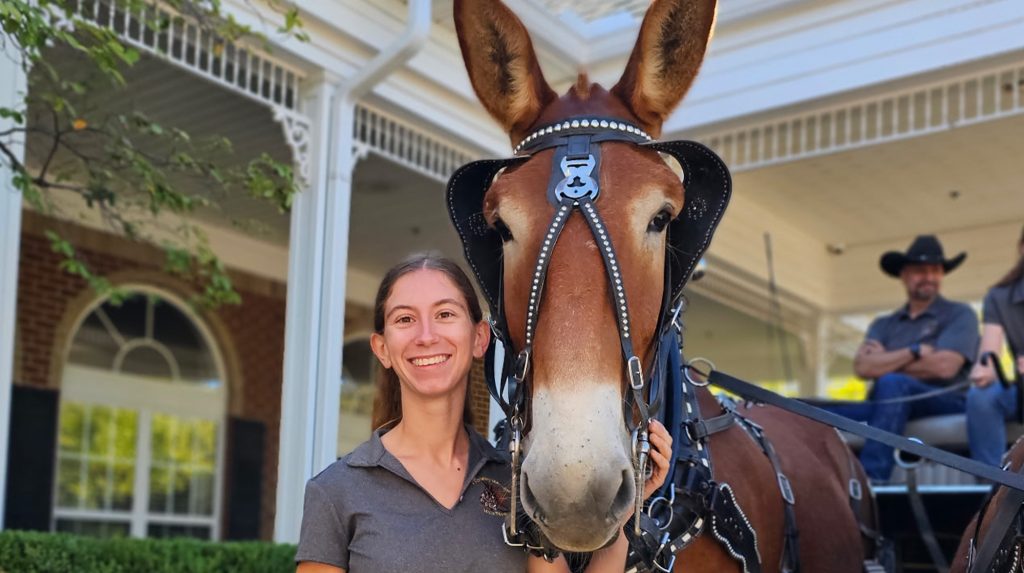
When mules Boone and George made their public debut at the 2024 University of Missouri Homecoming Parade, Sammi McNealy wasn’t watching from the sidelines. She was right there with them, helping guide the university’s beloved ambassadors through one of Mizzou’s most cherished traditions.
Just a few years earlier, she never would have pictured herself in that role.
“I used to not talk to anyone,” McNealy said. “I would go to class, keep my head down and leave. Vet school taught me to stop worrying about what people thought of me and be myself.”
For McNealy, now a third-year student in the Mizzou College of Veterinary Medicine, the parade represented more than months of preparing Boone and George. It reflected her own journey from a quiet student to someone comfortable leading, connecting with others and representing the university.
Originally from the small town of Jonesburg, Missouri, McNealy grew up around her family’s Brangus cattle herd. While earning her undergraduate degree at Mizzou, she worked at the university’s Foremost Dairy, where she discovered a love for veterinary medicine.
“Working with the veterinarians, animals and people at Foremost really solidified my decision to go to veterinary school,” she said. “I saw firsthand how much passion goes into an industry that a lot of people just don’t realize.”
The experience also introduced her to many faculty members who would later become her instructors in veterinary school.
“I knew the education I was going to get at the Mizzou CVM wasn’t something I could get anywhere else,” McNealy said. “The faculty are very hands-on with students, they genuinely care about us, and I wanted to continue learning from them.”
A new sense of confidence
Veterinary school challenged McNealy in more ways than one. Along with developing clinical knowledge and hands-on skills, she found opportunities to grow as a leader.
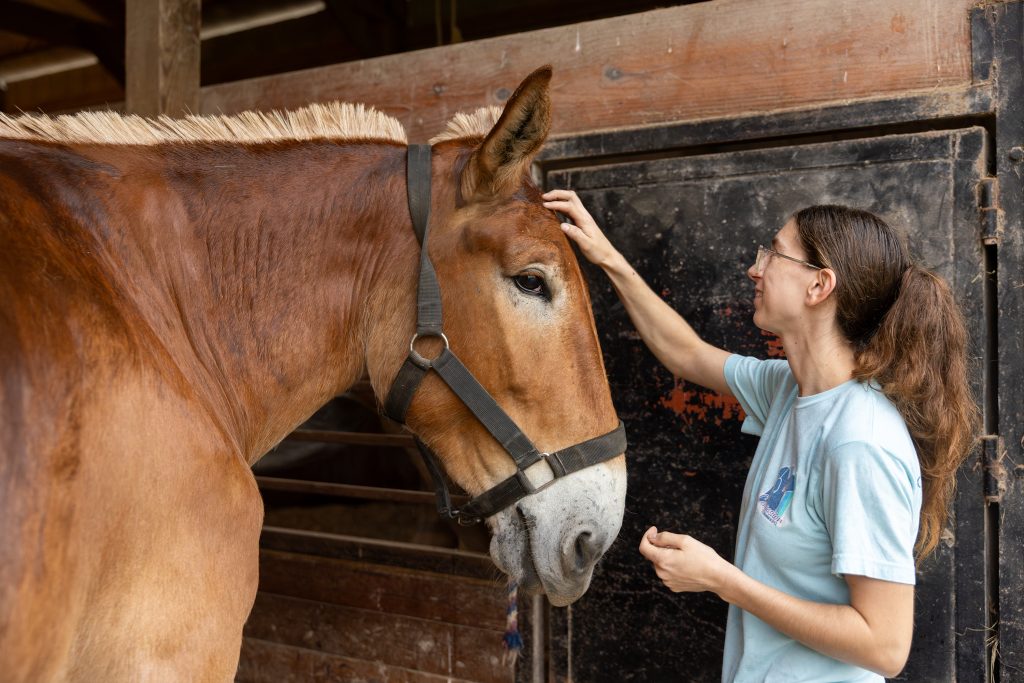
She became vice president of the dairy section of the Bovine Club, organizing experiences for fellow students. She also joined the Mule Club, where caring for the university’s beloved ambassadors quickly became one of the highlights of her veterinary school experience.
“I was drawn to the Mule Club because we were out working with the animals, meeting people and representing Mizzou,” she said.
As an officer in the Mule Club, McNealy found herself stepping into roles she never imagined she’d take on. Whether greeting visitors at the mule barn, representing Mizzou at community events or helping lead Boone and George, she was constantly interacting with people.
Looking back, she said those moments helped prepare her for much more than public appearances.
“Mule Club has given me the opportunity to develop communication skills that are vital to my interactions with clients,” said McNealy. “Our patients can’t tell us what’s wrong, so we rely on owners to communicate what they see and ask the right questions to help develop a diagnostic list. A production animal veterinarian is only as successful as the clients they serve, so it’s important to invest in those relationships and help their farms succeed.”
Preparing to serve Missouri’s rural communities
As she continues exploring different areas of veterinary medicine, McNealy said Mizzou has encouraged her to discover where she fits best.
“The college really supports you in figuring out who you want to become as a veterinarian,” she said. “You discover what you’re good at, what you enjoy and even what you don’t enjoy.”
After she graduates in 2028, McNealy hopes to help address the increasing demands for rural large animal veterinarians by providing care to producers and building lasting relationships with farming communities. She also hopes to one day own a practice that combines a traditional clinic with ambulatory services, bringing veterinary care directly to the farms that need it most.
“I want to be more than someone who comes out to treat cattle,” McNealy said. “I want to invest in the farms I work with, help identify problems and find solutions that make a difference.”
For McNealy, becoming a veterinarian has involved much more than lectures and labs. Through mentorship, hands-on experiences and opportunities to lead both on campus and in the community, she’s gained the confidence to serve not only the animals in Missouri’s rural communities, but the people who depend on them.