Published on
Updated on
Story contact: Nicholas Childress, CVMMarCom@missouri.edu
Photos by Karen Clifford
Rowena Woode knows what it feels like to wonder if you’re on the right path.
That uncertainty followed Woode through veterinary school, her PhD and postdoctoral training, and even into her first faculty role. Along the way, she discovered that the experiences helping her find her own direction could also help her guide others.
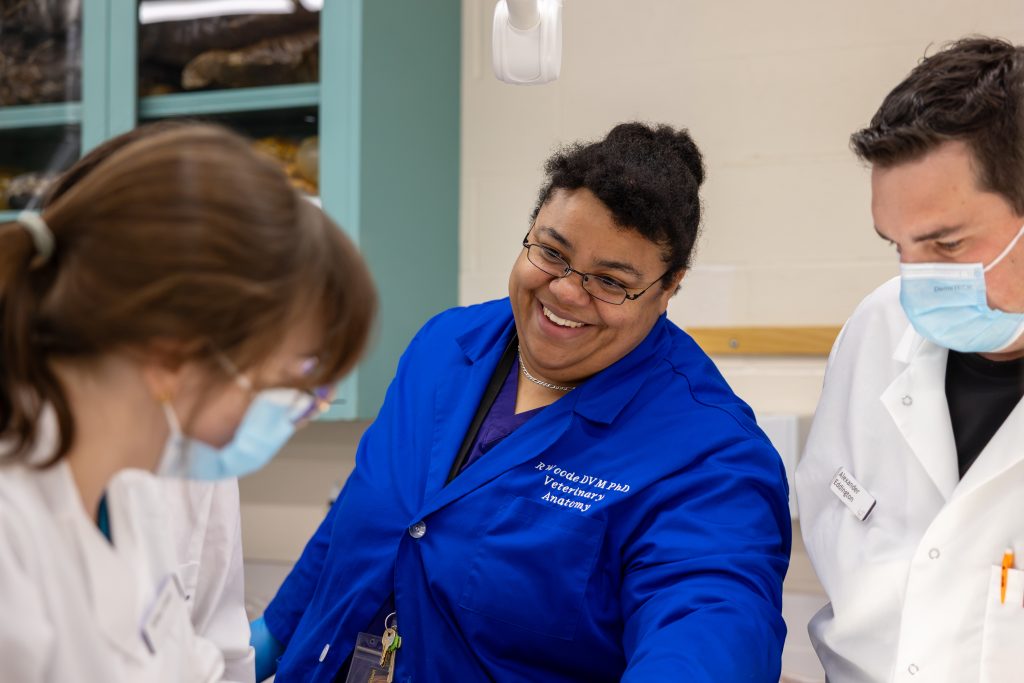
Today, Woode, DVM, PhD, is an assistant teaching professor at the University of Missouri College of Veterinary Medicine. Her path has taken her from the student seat to the front of the classroom, where she now helps the next generation of veterinarians find their way.
Discovering her direction
Woode came to Mizzou in 2012 as a veterinary student with an interest in research. As she continued through veterinary school and into her PhD program, she gained opportunities to work with students in ways that would ultimately shape her career.
Whether she was training undergraduate students and technicians, helping with summer research projects or teaching gastrointestinal physiology, Woode said she noticed how much she enjoyed working with students and helping them understand what they were doing. More importantly, she wanted them to understand why it mattered.
“I didn’t set out thinking I was going to be a teacher,” Woode said.” But the more opportunities I had to do it, the more I realized that this was what I really wanted to spend my time doing. I realized, wow, I really like this.”
What began as an unexpected interest gradually became the career she wanted to pursue.
“Teaching gave me the most fulfillment,” Woode said. “I realized it’s where I could make the biggest difference, and I wanted to build my career around that.”
Lessons that last
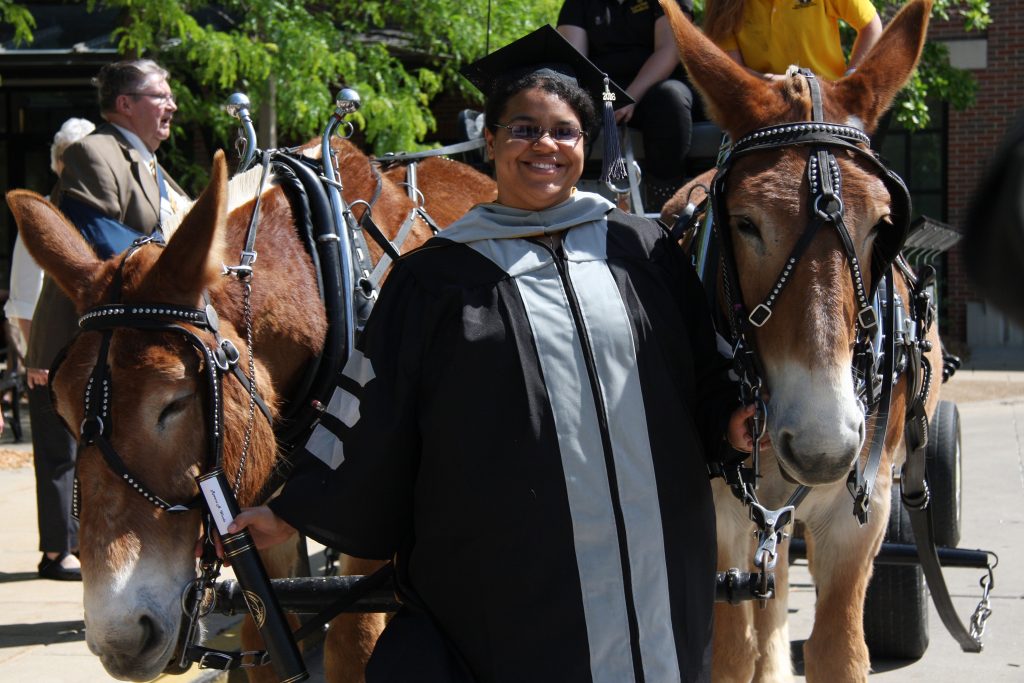
Woode credits many mentors with helping her reach that decision, not by telling her which path to take, but by giving her the guidance, support and independence to discover it for herself.
During a Veterinary Research Scholars Program project, one mentor gave Woode significant responsibility for her research, from writing grants to developing protocols. The experience taught her the value of being trusted to learn through challenges.
When Woode encountered a challenge, that same mentor shared a story about a mistake she had made herself rather than simply reassuring her that everything would be OK.
That moment stayed with Woode, because it showed her that mentorship isn’t just about having the right answers. Sometimes it’s about reminding someone that mistakes are part of learning and that they can move forward from them.
“You can pick yourself up, dust yourself off and understand what went wrong,” Woode said. “Then we try again.”
Woode now strives to give her students the same combination of independence, accountability and support that helped her grow. She sets high expectations but makes it clear that students can expect just as much from her.
“I tell my students that I expect a lot from them, and that they should also expect a lot from me,” she said.
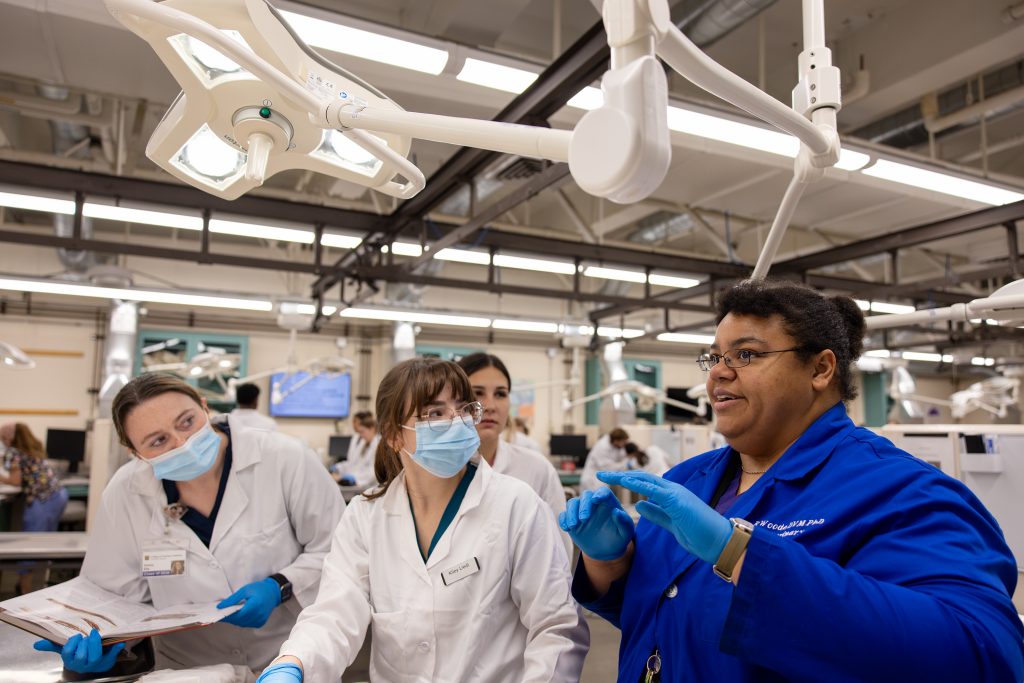
In her classroom, Woode draws on every part of her path. She teaches anatomy, histology, physiology and pharmacology, often helping students connect concepts across courses.
As a veterinary student, she remembers struggling to see how those subjects fit together. Now, she helps students make those connections while developing the critical thinking skills they’ll need to solve unfamiliar problems.
“It’s not about learning everything,” Woode said. “It’s about learning how to learn. That’s the most important skill I can pass on.”
That philosophy extends beyond the classroom. Veterinary medicine will continue to change, and future veterinarians will encounter new drugs, new treatments and new questions.
A path worth sharing
Standing in front of the same classrooms at Mizzou where she began her veterinary journey gives Woode a perspective on the students sitting in front of her now. She remembers the frustration, self-doubt and wondering whether she could do it and if she was supposed to be there.
When she sees students facing those same doubts, Woode can draw on her own experiences to remind them they aren’t alone.
“I can look students in the eye and say, ‘I understand,’” Woode said. “‘I’ve been in that spot.’”
Woode’s journey has brought her back to the same classrooms where she once questioned her own future. Now, she has the opportunity to offer students what her mentors gave her: the support and confidence to discover what comes next.
“I feel very lucky to be able to bring those experiences into the classroom,” she said. “I want them to get something from me and what I’ve learned along the way.”