Published on
Story contact: Deidra Ashley, CVMMarCom@missouri.edu
Photos by Karen Clifford
Teaching and hands-on learning are central to the student experience at the University of Missouri College of Veterinary Medicine. From the classroom to the clinic, faculty, residents and interns play an important role in helping students develop the knowledge, confidence and critical-thinking skills they need to become successful veterinarians.
Thanks to a partnership with Mizzou’s College of Education and Human Development, clinical pathology residents interested in academic careers can pursue a concurrent Master of Education degree while building on the teaching and mentorship experiences they gain throughout their residency.
“By bringing together veterinary science expertise and research-based approaches to teaching and learning, we can support veterinarians in expanding the teaching and mentorship skills they bring to the classroom and clinic,” said Laura Zangori, PhD, an associate professor of science education with the College of Education and Human Development. “This collaboration highlights the value of integrating educational expertise into specialized professional fields.”
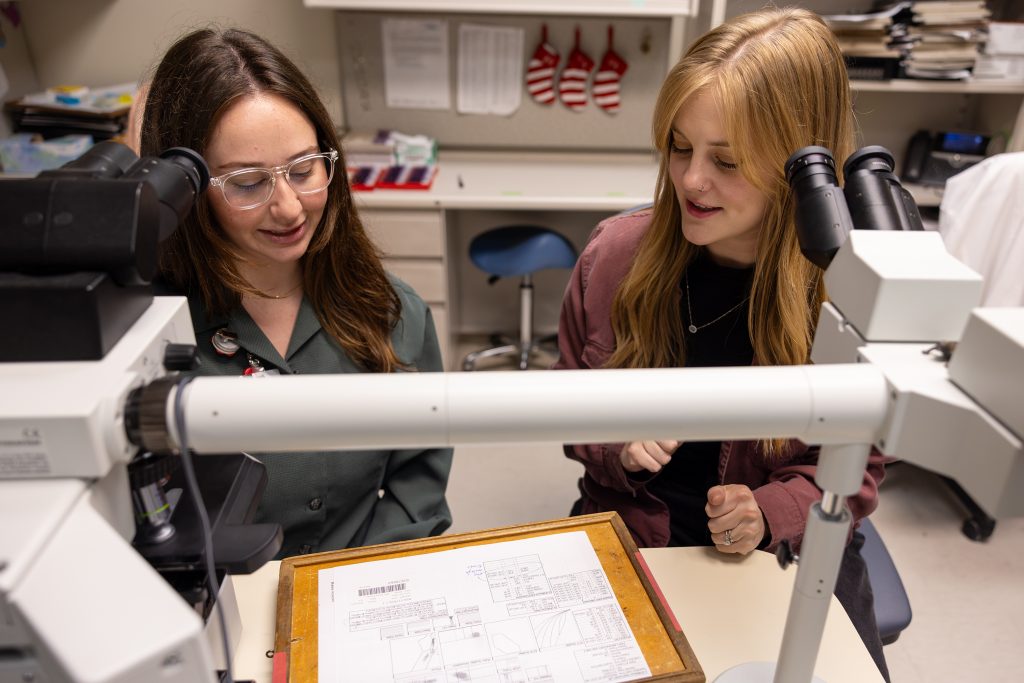
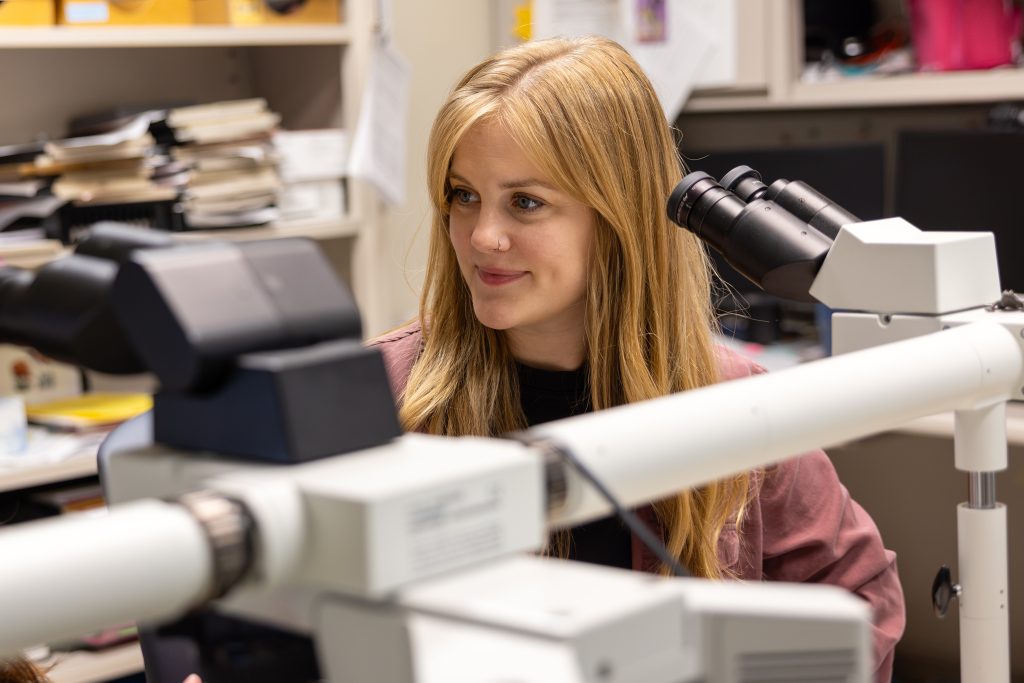
For Sidney Bogue, DVM, MEd, DACVP, the initiative’s first participant, the opportunity offered a chance to explore teaching from a new perspective while continuing to develop as a clinical pathologist.
“I’d spent years as a student, myself, but I’d never really thought about how people learn,” Bogue said. “The MEd program introduced me to learning theory, curriculum development and the academic side of education, while my residency provided the scientific foundation and teaching experiences that brought those perspectives to life.”
After completing her residency and MEd, Bogue chose to remain at Mizzou and become a faculty member in the clinical pathology program. The team’s strong culture of mentorship and learning played a significant role in that decision.
“I wanted to stay in an environment where teaching is valued and where people genuinely invest in one another’s success,” she said. “There’s a strong culture of mentorship here, and that’s something I wanted to be part of.”
Connecting theory and practice
Today, Bogue brings together expertise in both education and clinical pathology, helping students connect classroom learning to real-world patient care.
“Students learn best when they’re involved,” she said. “The more opportunities we can create for them to apply concepts, ask questions and work through cases, the more confident they’ll become. I want students to leave with the knowledge and confidence they need to use those skills in practice.”
For Bogue, building that confidence is essential to preparing students for veterinary practice.
“Our patients can’t tell us what’s wrong,” Bogue said. “We rely on laboratory data to help us understand what’s happening, identify disease and guide treatment decisions. When veterinarians understand how to interpret those results and use them appropriately, they’re better equipped to care for their patients.”
The lessons Bogue gained through the MEd continue to shape how she approaches teaching and mentorship.
“The residency taught me how to be a clinical pathologist, and the MEd helped me think more deeply about how to teach,” she said. “Together, they shaped the way I approach student learning and mentorship.”
As a result, the impact of the partnership extends far beyond the classroom. The students Bogue teaches today will go on to care for animals, support clients and serve communities across Missouri and beyond — carrying forward the lessons, mentorship and experiences that helped shape their own veterinary education.