Published on
Updated on
Story contact: Nicholas Childress, CVMMarCom@missouri.edu
Photos by Karen Clifford
The combination of memes, mnemonics and microscope labs isn’t usually the first thing people think when it comes to clinical pathology. But for Michelle DeCourcey, DVM, MS, DACVP (Clinical), these unconventional teaching tools have become a powerful way to help veterinary students build confidence. Her creativity shows up in how she turns challenging concepts into visual, memorable and sometimes humorous learning tools.
As an assistant clinical professor of clinical pathology at the University of Missouri College of Veterinary Medicine, DeCourcey balances diagnostic work, resident mentorship and classroom teaching, all while creating opportunities for students to engage with the material in a meaningful way.
The Portland, Oregon, native spent the first five years of her career in general practice before realizing her greatest professional interests extended beyond the exam room. She became increasingly fascinated by the laboratory findings and diagnostic clues that helped explain what was happening with her patients. That curiosity led her to pursue advanced training in clinical pathology, a specialty that combined her love of science, investigation and problem-solving.
“I love the puzzle-piece aspect of clinical pathology,” DeCourcey said. “You’re putting information together to help get answers for a patient, and that’s really powerful.”
When she made the decision to return to school for her residency in clinical pathology and master’s in veterinary science, she knew she wanted a career that blended diagnostics with teaching. In academic veterinary medicine, she found the opportunity to do both.
“The further I got in veterinary medicine, the more I realized I always wanted to be a teacher,” DeCourcey said. “Clinical pathology is something veterinarians use every single day, so I try to focus on the things students are actually going to apply in practice and give them tools that help them feel comfortable working through cases on their own.”
Creativity in the classroom
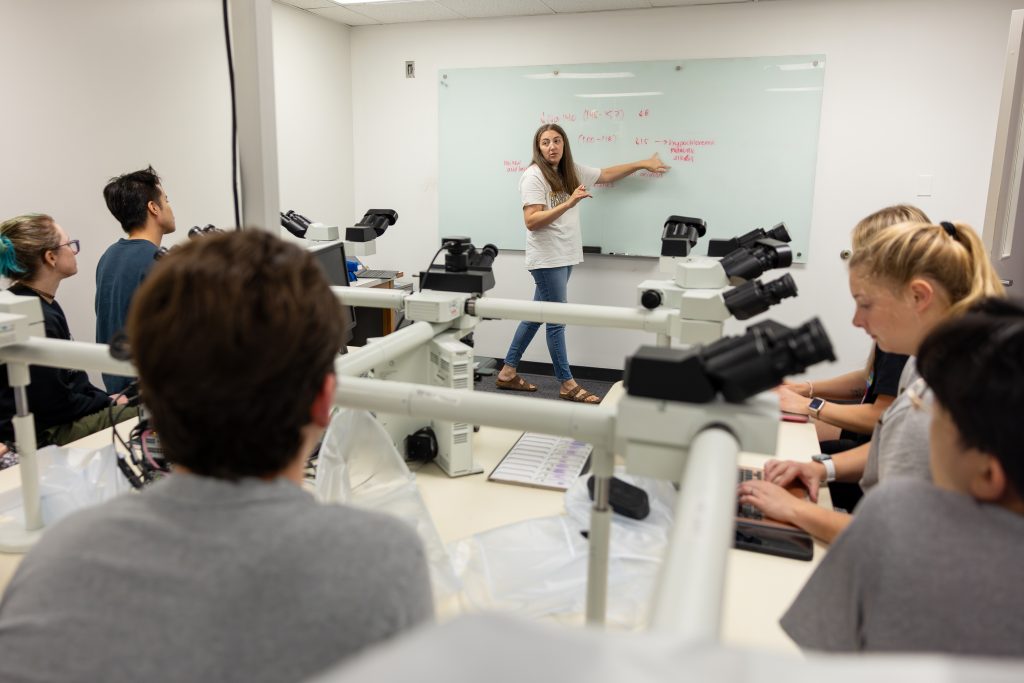
DeCourcey is known for incorporating creative and unorthodox teaching approaches through her use of humor, mnemonics — a word, phrase or pattern used to help remember information — and memes to reinforce difficult material.
“I love them because they make things stick,” DeCourcey said. “If students can connect something to a visual or something funny, they’re much more likely to remember it later.”
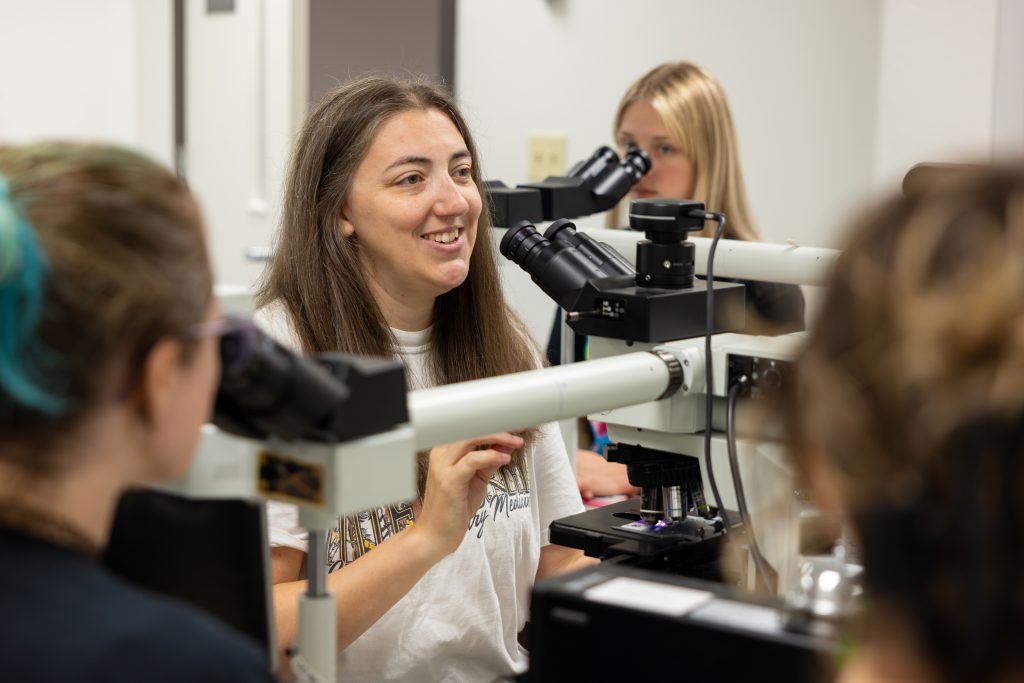
That focus on making complex material easier to digest carries directly into her small-group block teaching, where students move into applying concepts through case-based learning and diagnostic interpretation.
“Dr. DeCourcey’s teaching style is what made clinical pathology click for me,” fourth-year student, Jenelle Catalina said. “She has a gift for making the subject approachable and helping students learn by doing rather than just in theory. Her enthusiasm is genuinely infectious, and it’s shaped not just how I understand the subject, but how much I value the role it plays in patient care.”
Creating clinical connections
Beyond the classroom, DeCourcey is committed to creating opportunities for students to learn by doing. She regularly works with student organizations to expand access to hands-on learning experiences that reinforce concepts taught in the curriculum.
One example is her collaboration with the Comparative Medicine and Pathology Club. Together, they organize blood smear and urinalysis wet labs that give first- and second-year students the opportunity to practice clinical skills alongside faculty and residents. These experiences help students build confidence and develop practical skills well before they enter clinics.
“It’s really important to me to give students early exposure to clinical pathology in a supportive environment,” DeCourcey said. “It makes our field — and our clin path faculty — more approachable and gives students opportunities to build strong connections with us before they’re in our class.”
That blend of science and creativity extends beyond the classroom. She also explores small craft projects outside of her work, including clinical pathology-themed magnets she has designed and made in the past, providing another outlet for the same instinct to make learning visual, tangible and fun.
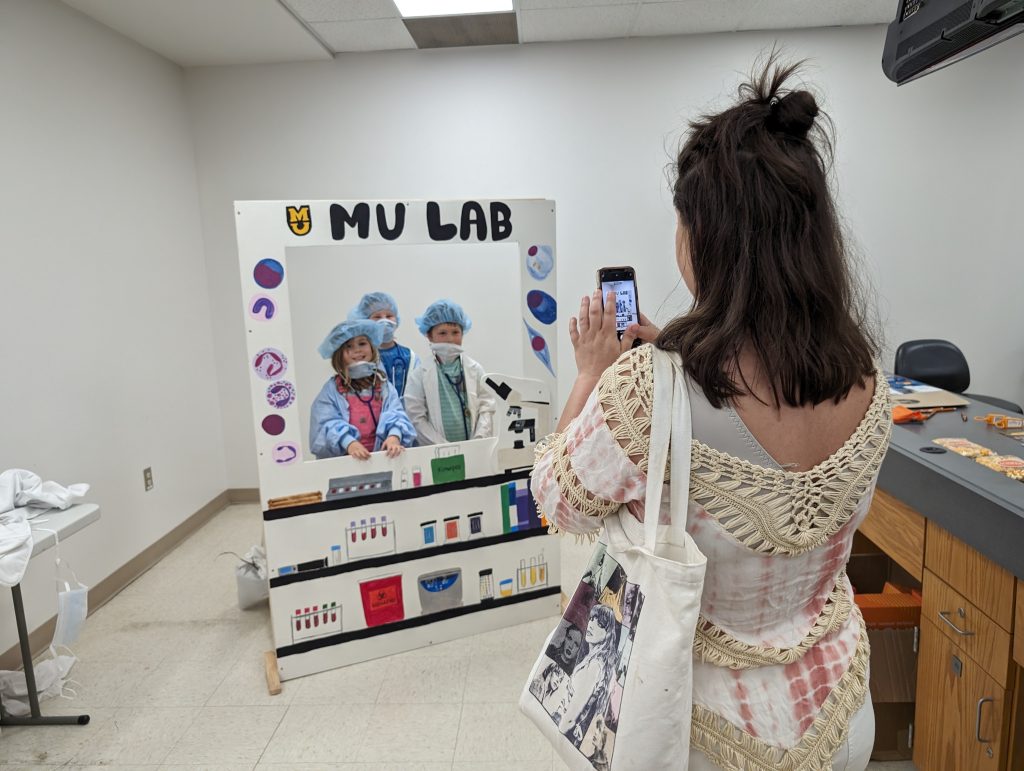
DeCourcey carries that spirit into outreach efforts during the college’s annual Open House. She has helped add cytology-focused microscope activities, designed educational materials and created custom artwork for visitors to enjoy.
Each year, she also designs original stickers for Open House attendees to take home, combining education and creativity in a way that leaves a lasting impression on prospective students, families and the community.
Through every lab, lecture and outreach effort, DeCourcey’s focus remains centered on creating opportunities for students to build confidence, connect with clinical pathology and grow as future veterinarians at Mizzou. “When students leave feeling more comfortable and capable, that’s the best part,” DeCourcey said. “You want them to know they can figure things out and continue building those skills throughout their careers.”