Published on
Story contact: Rachel Becker, CVMMarCom@missouri.edu
Photos by Karen Clifford
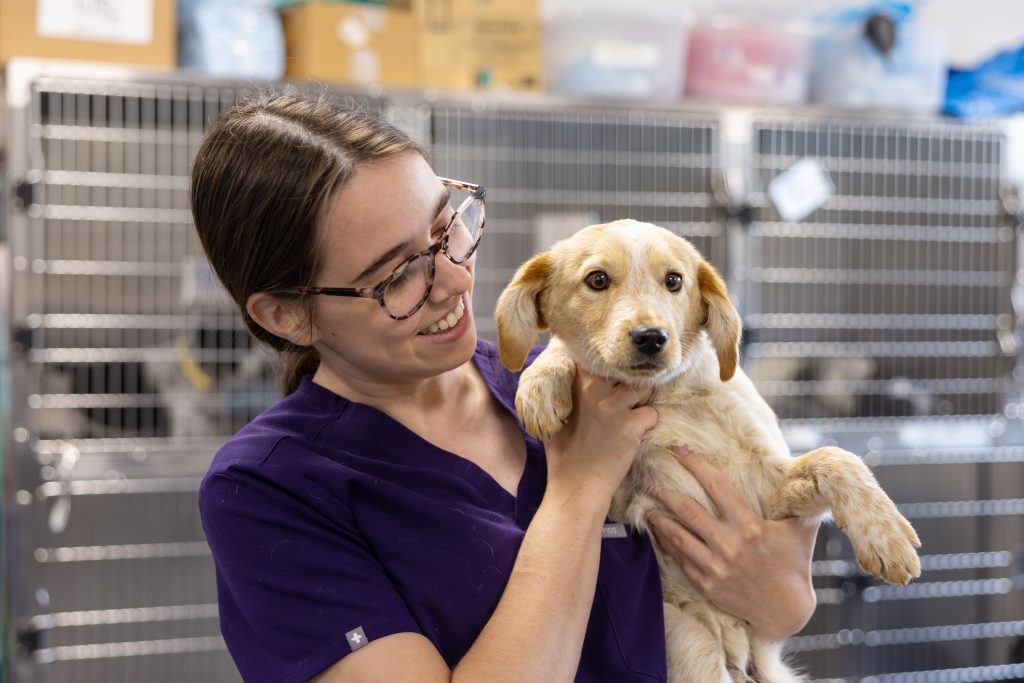
Kelsey Oliver jokes that her house feels like a miniature medical ward, complete with pill organizers, prescription food and pets of all shapes and sizes. For the fourth-year University of Missouri College of Veterinary Medicine student, that carefully managed chaos reflects a lifelong commitment to helping animals.
At Mizzou, that passion is continuing to evolve into clinical confidence. Through mentorship, hands-on training and experiences across the college’s curriculum, Oliver is strengthening the medical knowledge, communication skills and critical thinking needed to care for medically complex animals.
Oliver has volunteered at animal shelters since she was 18. While balancing the demands of veterinary school, she has also fostered nearly 100 animals, providing temporary in-home care for pets recovering from illness, injury or medical treatment. She said her experiences at Mizzou have changed the way she approaches those cases and deepened her understanding of patient care.
“The more I learn at Mizzou, the more prepared I feel to advocate for animals when they need someone paying close attention,” Oliver said. “Now I can recognize certain symptoms, work with the vets and tailor care toward specific problems instead of just recognizing that something is wrong.”
Learning through mentorship and clinical training
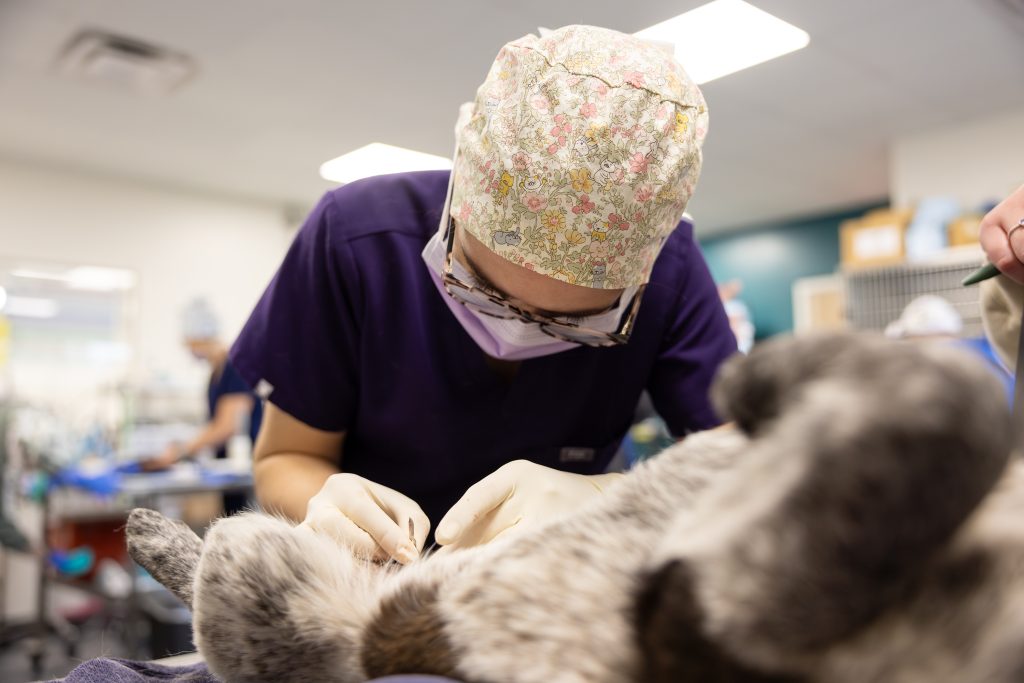
Hands-on learning is a defining part of the Mizzou College of Veterinary Medicine experience. Through the college’s Shelter Medicine Program, students work directly with faculty mentors and community partners to help care for shelter animals across a wide range of medical and behavioral cases.
For Oliver, those experiences have become an important extension of what she’s learning in the classroom.
“The Shelter Medicine faculty really value student input and encourage us to be involved in treatment plans,” Oliver said. “They trust us to learn by doing.”
That support also motivated Oliver to help create additional opportunities for other veterinary students interested in shelter medicine. She helped establish the Shelter Medicine Club’s foster program, which connects veterinary students with animals needing temporary home care during recovery.
“Working at the shelter, I saw the need for more fosters who were comfortable taking on medical cases,” Oliver said. “Veterinary students can provide a level of monitoring and support that really helps these animals while they heal.”
Oliver said one of the most valuable parts of her experience at Mizzou has been seeing how different areas of the curriculum connect in clinical settings.
While caring for a foster kitten recovering from a severe eye infection, Oliver remembered lessons from her ophthalmology coursework about inflammation and tear production. After noticing signs of discomfort during the kitten’s recovery, she worked with shelter veterinarians to adjust the treatment plan and add additional eye support.
“It was one of those moments where something from class immediately clicked in a real patient situation,” Oliver said. “As we learn more in different courses, all the pieces start connecting, and I’m able to apply that knowledge in real time.”
She said experiences like that have changed the way she approaches patient care.
“Mizzou has taught me to pay attention to the small changes,” Oliver said. “Sometimes those details can make a huge difference for an animal recovering from illness or injury.”
After graduating in May 2027, Oliver hopes to pursue a career in low-cost and shelter medicine, where she can continue helping expand access to veterinary care for animals and the people who love them.